Alocasia Care: Watering, Light and Yellow Leaves
Check the mix and the season before treating a changing leaf.
Quick questions
Why are my Alocasia leaves turning yellow?
Wet roots, a mix that has gone too dry, inadequate light and seasonal change are all possibilities. Check the mix, roots, light and growth pattern before changing care.
How often should I water Alocasia?
Check the upper mix during active growth and water when it begins to dry, then drain the pot. Reduce watering substantially when the plant is dormant.
Will an Alocasia lose leaves in winter?
Many slow down or shed leaves during winter dormancy. Keep the corm from sitting wet and watch for new growth when conditions improve.
Does Alocasia need a humidifier?
It prefers medium to high humidity, but first measure your room. A humidifier can help in dry air; it is not a fix for wet roots or poor light.
Can yellow Alocasia leaves turn green again?
A fully yellow leaf will not turn green again. Correct a likely cause and watch whether new leaves grow well.
Is Alocasia safe for cats and dogs?
No. ASPCA lists Alocasia as toxic to both. Chewing can cause painful mouth irritation and swelling; contact a veterinarian if ingestion is suspected.
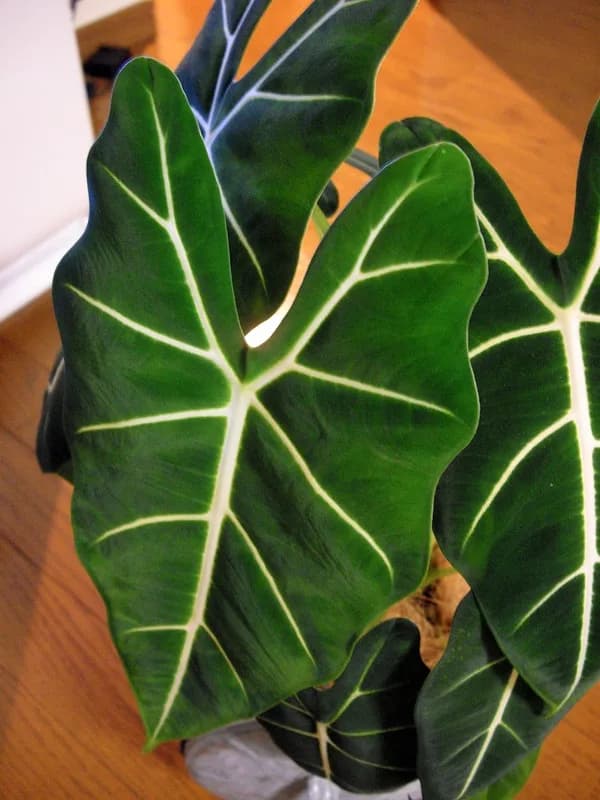
Alocasias have bold leaves, but a yellow leaf is not a diagnosis. Start with the soil, light and season before choosing a fix. This is a genus guide: a compact Green Velvet, shown in the photo, will not have exactly the same size or pace as a large elephant's ear.
Place it in bright, indirect light
Give an actively growing Alocasia a warm position with bright, indirect light. Strong sun can scorch leaves; a dim corner can slow growth. Keep it away from cold draughts. When seasons change, check the light reaching the plant rather than assuming the window still provides the same conditions.
Water according to growth and the mix
During active growth, water when the upper part of the mix begins to dry, then let excess water drain. Use a pot with drainage and a mix that retains some moisture without staying waterlogged. The right interval changes with plant size, pot, light and temperature, so an eight-day rule is not reliable.
Winter growth often slows. If your Alocasia becomes dormant or loses leaves, reduce watering substantially and check the mix before adding more. Do not keep a resting corm in constantly wet soil. If it is still making leaves in a warm, bright room, observe that plant instead of forcing a dormancy schedule.
Diagnose yellow leaves in context
One older leaf may fade as growth changes. Several yellowing leaves, especially with wet mix or a soft base, call for a drainage and root check. A light, dry pot can point in the other direction. NC State also lists inadequate light as a possible cause, so yellowing alone cannot tell you to water more or less.
Check leaf undersides for spider mites when you see fine stippling or webbing. Brown edges may involve dry air, but also check watering and root health before raising humidity. Alocasias like medium to high humidity; use a suitable humidifier if your room is dry, without leaving leaves wet or walls damp.
Keep people and pets safe
ASPCA lists Alocasia as toxic to cats and dogs. Its insoluble calcium oxalates can cause painful mouth irritation and swelling if chewed. Keep it away from pets and children; if a pet has eaten it, contact a veterinarian or poison-control service. Wear gloves when handling irritating sap.
Use LeafLovers to note when you checked the mix and what happened to new growth. A care reminder is a cue to inspect, not a fixed watering order.
Sources for this guide
4 sources
Spotted something that needs correcting? Send a message.